Introduction
Slow cooking has become a staple in modern kitchens, transforming how people approach weeknight dinners and meal preparation. The appeal is straightforward: throw ingredients into a pot, set it, and return hours later to a fully prepared meal. Among the many options available, larger-capacity slow cookers occupy a unique niche—they’re designed for those who need to prepare substantial quantities of food without spending hours at the stove.
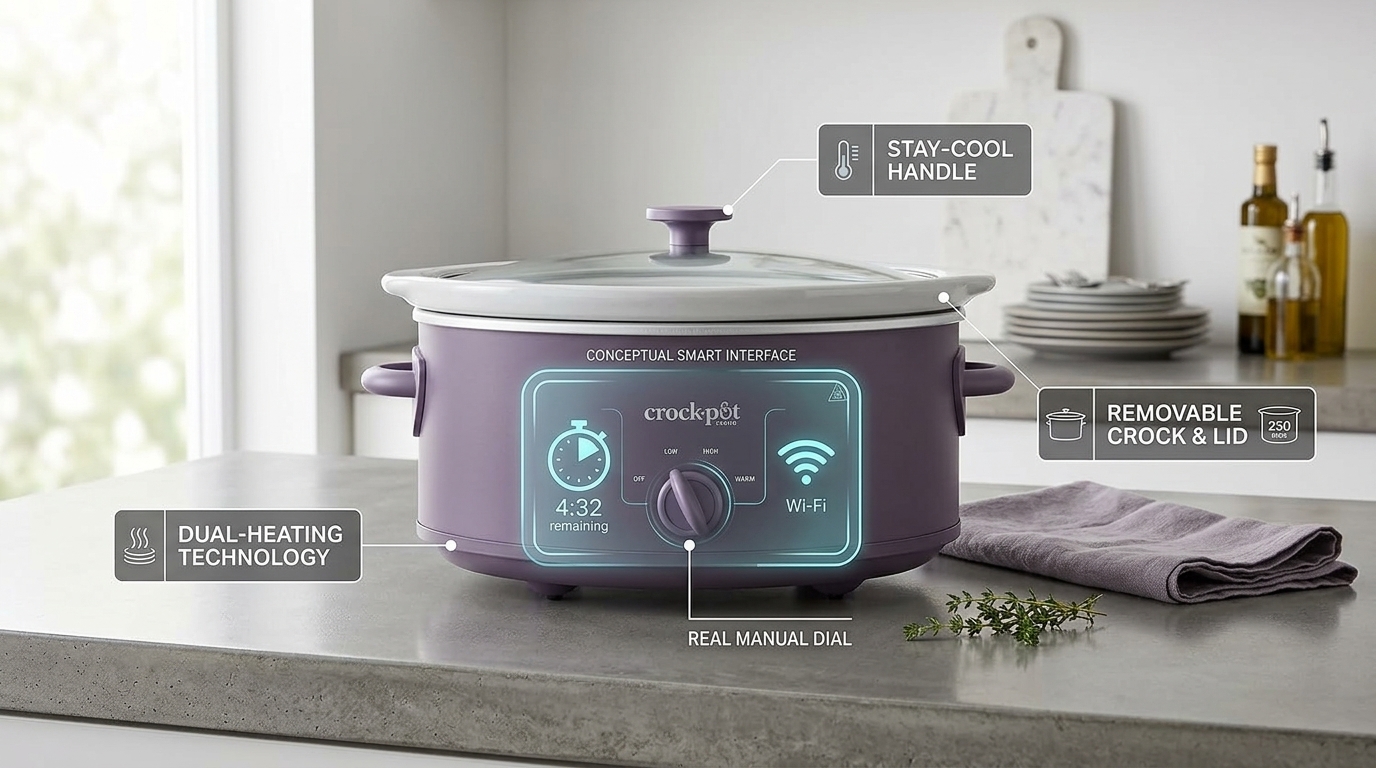
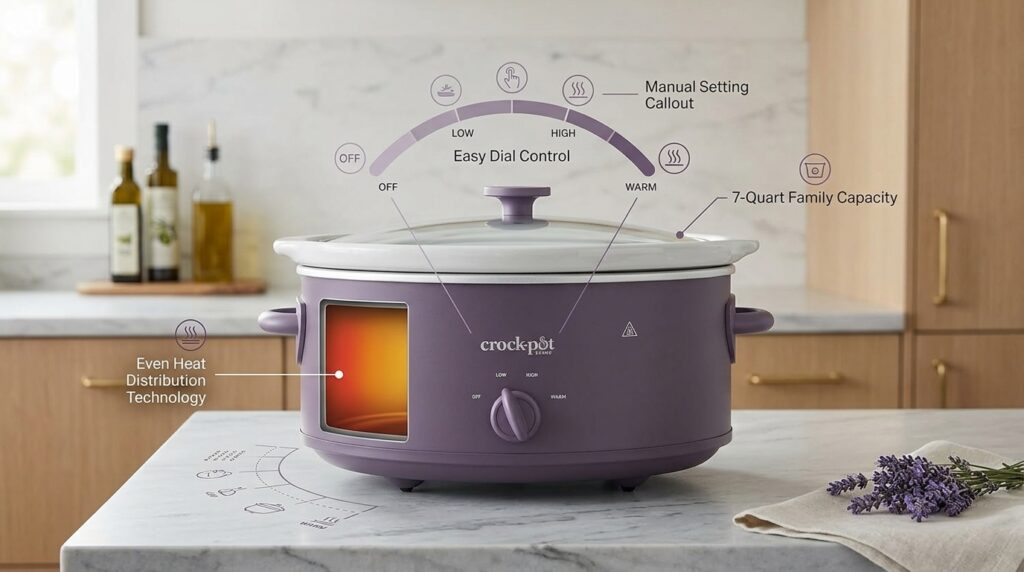
The Crock-Pot Design Series 7-Quart Manual Slow Cooker in Purple Potato represents one approach to meeting this demand. This particular model combines practical functionality with a distinctive aesthetic, making it worth understanding what it offers and whether it aligns with your cooking habits and kitchen needs.
This article explores the features, practical applications, and considerations that come with owning a large-capacity slow cooker, helping you make an informed decision about whether this type of appliance fits your lifestyle.
Understanding the 7-Quart Capacity
When most people think of slow cookers, they visualize the standard 4-6 quart models found in countless kitchens. A 7-quart capacity represents a significant step up in size. To put this in perspective, a 7-quart slow cooker can hold approximately 28 cups of ingredients, compared to about 20 cups for a standard 5-quart model.
This extra volume creates meaningful differences in how you use the appliance. You’re not simply cooking for more people—you’re cooking in a way that changes your approach to meal planning and preparation. The larger capacity allows for bigger hunks of meat, more vegetable volume, and the ability to prepare multiple meals at once or create generous portions that extend into leftovers.
Understanding what this size means in practical terms helps you assess whether you genuinely need this much capacity or if a smaller model would better suit your situation. It’s the difference between having leftover space in your slow cooker and having a slow cooker that’s perfectly scaled to your needs.
Key Features and Design Elements
Manual Operation
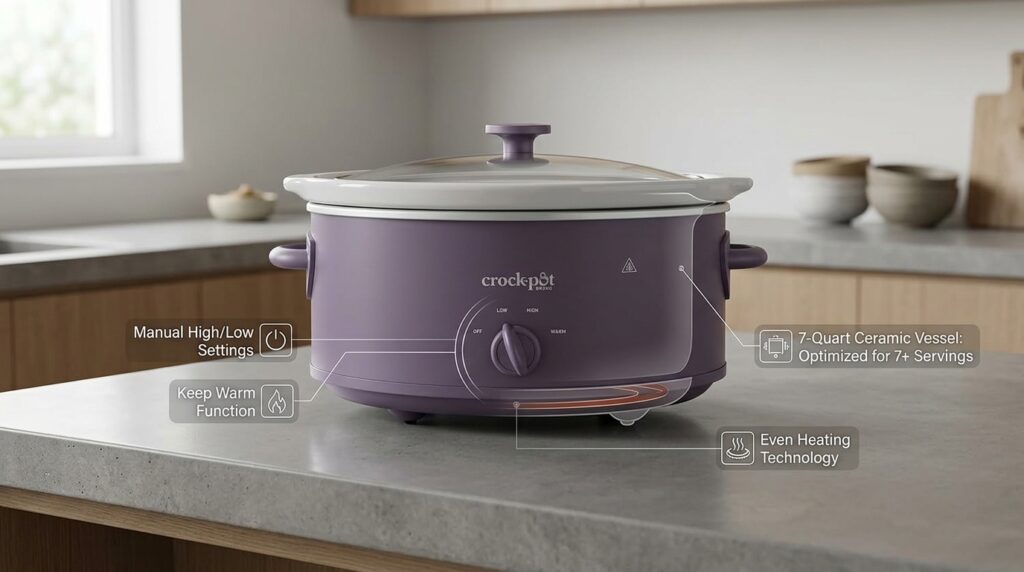
This model features manual controls rather than digital programming. This means no touchscreen, no preset cooking programs, and no delayed-start features. Instead, you’ll find straightforward dial controls for setting temperature and duration.
The manual approach offers certain advantages worth considering. Without digital components, there’s less that can malfunction electronically. Manual controls tend to feel more intuitive to some users and don’t require worry about power outages affecting memory settings. However, this also means you’ll need to be present to turn it on and off manually or plan your cooking schedule accordingly.
Temperature Settings
The appliance typically includes low and high temperature settings, which is standard for slow cookers. Low settings are designed for extended cooking times, usually 8-10 hours, while high settings reduce cooking time to approximately 4-6 hours. This flexibility lets you adjust your cooking approach depending on when you need the meal ready.
The Purple Potato Design
The distinctive color is more than a cosmetic choice. Many people keep their slow cooker on the countertop rather than storing it away, and the Purple Potato finish reflects a design philosophy emphasizing that small appliances can contribute to kitchen aesthetics. The color is neutral enough to work in various kitchen styles while being distinct enough to make a visual statement.
The exterior design includes handles for transport, which becomes increasingly important with a 7-quart capacity. Moving a slow cooker full of hot food requires stability and careful handling, so ergonomic design in this area matters practically, not just aesthetically.
Practical Cooking Applications
Family Meals and Batch Cooking
The primary advantage of a 7-quart capacity is handling larger quantities. A family of six can prepare a single meal that everyone eats the same day, with potential leftovers for another meal or two. Alternatively, those interested in batch cooking can prepare multiple portions of a single dish, freezing portions for future use.
Chili, stews, soups, and braised dishes naturally scale well to larger volumes. A batch of chili that would leave someone with limited leftovers in a smaller cooker becomes a meal-prep project that covers several dinners in a 7-quart model.
Entertaining and Gatherings
Hosting dinner for guests or providing food for gatherings becomes simpler with larger capacity. A slow cooker at a party can maintain hot dips, sauces, or secondary dishes without requiring attention or oven space. The 7-quart size means substantial quantities without needing multiple appliances.
Extended Cooking Projects
Certain recipes benefit from the larger interior volume. Whole chickens, multiple cuts of ribs, or layers of ingredients benefit from the extra space that a 7-quart capacity provides. Food cooks more evenly when not compressed, and larger pieces don’t require cutting down to fit the vessel.
Meal Prep Efficiency
The growing interest in meal preparation has made larger slow cookers attractive for people who dedicate a day to cooking for the week ahead. A single cooking cycle can produce enough portions to cover several meals, reducing daily cooking demands during busy weeks.
Who This Model Might Suit
A 7-quart slow cooker isn’t the right choice for everyone, but certain situations make it particularly practical.
Large households benefit from the capacity, preparing meals that satisfy everyone without needing multiple cooking vessels. Families of six or more often find larger slow cookers pay for themselves through convenience and fuel efficiency.
Frequent entertainers who host dinners or gatherings can maintain hot food without devoting oven or stovetop space. The appliance works as a backup cooking tool or as a supplement to traditional cooking during event preparation.
People focused on batch cooking or meal prep find the volume worthwhile when preparing multiple meals at once. The efficiency of a single long cooking cycle producing numerous portions appeals to those managing busy schedules.
Those with limited oven access appreciate the ability to cook large quantities without using oven space, which is particularly valuable in smaller kitchens or when the oven is already occupied with other dishes.
Important Practical Considerations
Countertop Space
A 7-quart slow cooker occupies significant countertop real estate. Unlike smaller models that fit unobtrusively between other appliances, a slow cooker this size demands deliberate placement planning. If your kitchen counter space is already crowded, this should factor into your decision.
Storage
Storage when not in use depends on your cabinet space and kitchen layout. Unlike smaller slow cookers that fit comfortably on most shelves, larger models may require dedicated storage solutions or semi-permanent countertop placement.
Cooking Time Adjustments
Filling a 7-quart capacity to its maximum requires more time for food to heat through and cook completely compared to partially filled recipes. Following recipes designed for smaller volumes may result in undercooked food. Adjusting cooking times or recipes formulated specifically for larger quantities matters for consistent results.
Filling Levels
Slow cookers perform best when filled between one-half and three-quarters capacity. Extremely full cookers may not develop proper heat circulation, while nearly empty cookers may overcook food. Understanding proper fill levels ensures better results and more efficient cooking.
Heating Characteristics
Larger volumes of food take longer to reach temperature and establish cooking. Cold ingredients added to the slow cooker will extend the actual cooking time before food reaches the desired doneness. Planning for these characteristics prevents disappointment.
How Slow Cookers Compare to Other Cooking Methods
Slow cooking occupies a different place in cooking than oven roasting, stovetop simmering, or pressure cooking. Each method has distinct advantages.
Oven roasting develops surface browning and complex flavors through the Maillard reaction in ways slow cooking cannot replicate. However, slow cooking requires no monitoring and produces tender results that might require hours of lower-temperature oven time to achieve.
Stovetop cooking offers immediate temperature control and faster cooking times but demands active attention and supervision. Slow cooking’s primary value proposition is that it doesn’t require your presence once started.
Pressure cooking and modern electric pressure cookers produce results in a fraction of slow cooker time. However, the technique differs fundamentally, and some dishes that benefit from extended gentle heat cook less ideally under pressure.
Each method serves different purposes. Slow cooking shines when you have time but not active attention, want incredibly tender results from tough cuts of meat, or need to prepare large quantities. Understanding these distinctions helps place slow cooking in perspective as one tool among many, rather than a replacement for all cooking methods.
Maintenance and Care
Slow cookers with manual controls generally require minimal maintenance. The removable stoneware insert or cooking vessel should be cleaned after each use, either by hand washing or in some cases by dishwasher placement. Always consult the specific product manual for guidance on cleaning, as some stoneware can be affected by extreme temperature changes or dishwashers.
The heating base contains the electrical components and should be wiped clean with a damp cloth but never submerged. Over time, mineral deposits from water or food splatter may accumulate on the exterior, but gentle cleaning restores appearance.
Unlike models with digital components, manual slow cookers have fewer parts that require attention or may fail. This can represent an advantage in terms of reliability and ease of maintenance over many years of use.
Frequently Asked Questions
Can a 7-quart slow cooker work for smaller recipes? Yes, but filling recommendations still apply. Recipes should fill the cooker at least half full for proper cooking. A recipe designed for a standard 5-quart cooker will need proportional scaling upward, or you’ll need to accept that cooking times might be extended slightly with minimal filling.
How long does a full 7-quart capacity take to reach cooking temperature? This depends on the ingredients and starting temperature, but expect 45 minutes to over an hour for a completely filled slow cooker to reach steady cooking temperature on low setting. This is longer than smaller models and should factor into meal planning.
Is it worth getting a 7-quart capacity if I live alone or cook for one person? For daily cooking, probably not. However, if you enjoy batch cooking or meal preparation, creating multiple portions for freezing can still make the investment worthwhile. Many single-person households use larger slow cookers specifically for this purpose.
Can you cook frozen ingredients in a 7-quart slow cooker? Frozen ingredients extend cooking time significantly. Most recipes recommend thawing ingredients first for more predictable results, particularly with larger volumes where heat penetration takes longer.
What types of meat work best in a large slow cooker? Tougher, fattier cuts—chuck roasts, pork shoulder, beef short ribs, and chicken thighs—benefit most from slow cooking’s gentle heat. Leaner cuts can become dry if cooked too long, so attention to recipe specifics remains important.
Conclusion
The Crock-Pot Design Series 7-Quart Manual Slow Cooker represents a straightforward approach to large-batch cooking. The size delivers genuine utility for households preparing substantial meals, people interested in batch cooking, or those hosting gatherings. The manual controls offer simplicity and reliability, while the distinctive design aesthetic acknowledges that kitchen appliances can contribute to how a kitchen looks.
However, this size isn’t universally necessary. Honest assessment of your cooking patterns and kitchen space matters more than capacity alone. Someone cooking for two people with limited countertop space may find this model unnecessarily large, while a family of six or those committed to meal preparation might discover it invaluable.
The best decision comes from matching appliance capacity to your actual needs rather than focusing on features or capacity numbers alone. Consider how you actually cook, how much space you have, and whether you’d genuinely utilize the full capacity regularly.