Introduction
Slow cookers have become a staple in modern kitchens, and there’s a good reason why. The appeal of preparing a complete meal that simmers away while you handle other responsibilities has transformed how many people approach weeknight dinners and weekend entertaining. Among the various options available today, larger capacity models hold particular value for households that frequently cook for groups, meal prep for the week, or simply appreciate having flexibility in portion sizes.
The Hamilton Beach 6-quart slow cooker represents a particular segment of the slow cooker market—one that prioritizes capacity without excessive complexity. Understanding what this type of appliance can do, how it functions, and whether it aligns with your cooking needs requires looking beyond marketing language and examining the practical realities of slow cooking.
This article explores the fundamentals of how this particular model operates, examines its design features, considers various applications, and discusses factors that might influence whether this appliance would complement your kitchen.
Key Features and Design Elements
Capacity Considerations
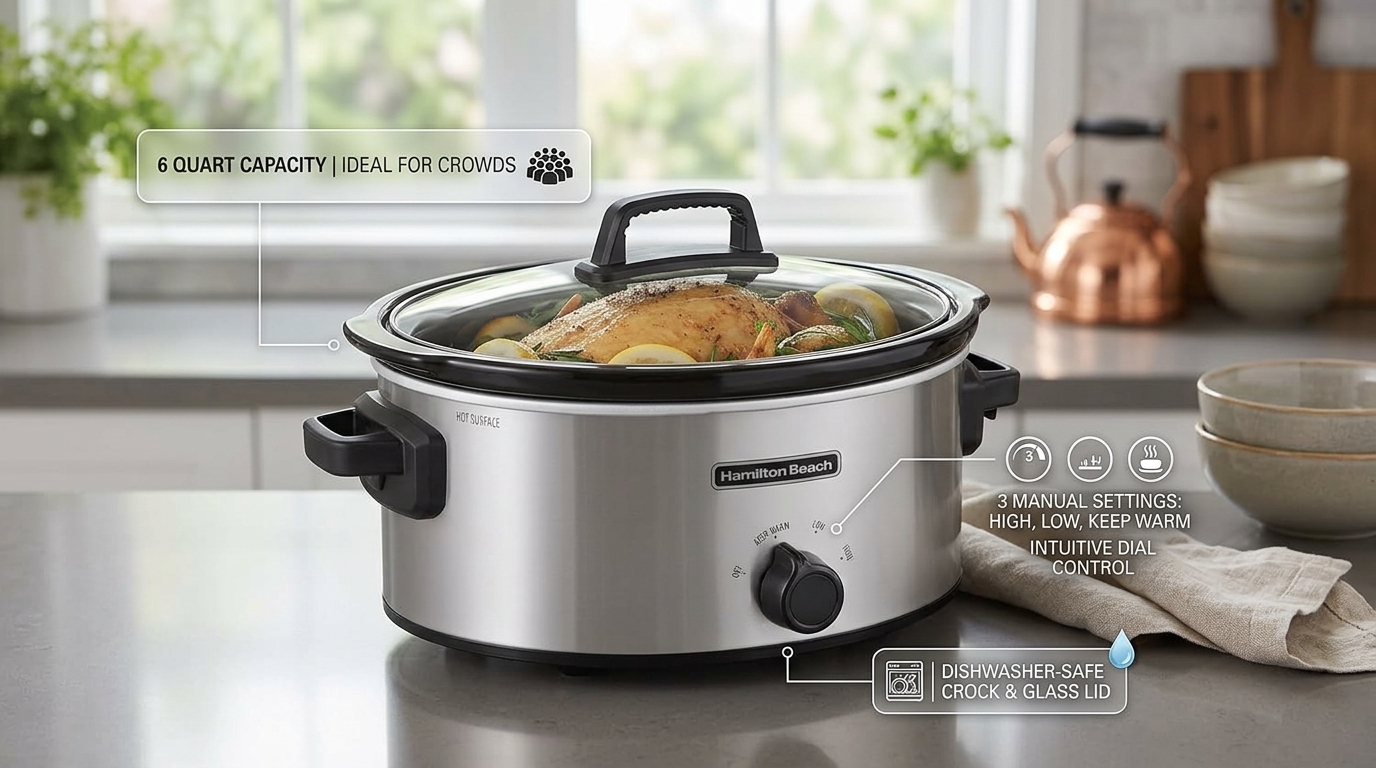
A 6-quart capacity places this model in the larger range of slow cookers. To put this in perspective, many standard household slow cookers fall in the 4 to 5-quart range, while smaller models might be 2 or 3 quarts. The 6-quart volume means you’re working with approximately 24 cups of food space, which has practical implications for meal planning.
This size accommodates cooking for larger groups without the need to run multiple appliances simultaneously. A roast that might barely fit in a 4-quart model sits comfortably here. Batch cooking and preparing multiple portions for storage becomes more feasible. The trade-off, of course, involves storage space in your kitchen and the footprint the appliance occupies on counters or in cabinets.
Temperature Settings
The three cooking settings—typically low, high, and a middle temperature—represent a straightforward approach to temperature control. This differs from models with numerous preset programs or digital interfaces. The simplicity here can be viewed either as an advantage for those who prefer uncomplicated operation or as a limitation if you’re accustomed to more specific temperature management.
Low settings generally cook food at lower temperatures over extended periods, which is ideal for tougher cuts of meat that benefit from slow heat. High settings accelerate the cooking process, though even at high, slow cookers operate at much lower temperatures than conventional ovens. The middle setting, when present, offers flexibility between these two extremes.
Stoneware Crock
The crock is constructed from stoneware, which has been the traditional material in slow cookers for decades. Stoneware retains and distributes heat evenly, contributing to consistent cooking results. Unlike some ceramic alternatives, stoneware is generally durable and resistant to temperature fluctuations when transitioning between cooking and serving.
One practical feature is that this particular crock is dishwasher-safe, which simplifies cleanup considerably. Being able to place cookware directly in a dishwasher rather than hand-washing saves time for busy households. This assumes you have access to a dishwasher, though even hand-washing stoneware is relatively straightforward.
Glass Lid
The removable glass lid allows you to observe cooking progress without lifting it entirely. During long cooking sessions, being able to glance at your food without releasing heat is genuinely useful. Glass doesn’t absorb odors or stains the way some lids might, and it’s typically easy to clean.
Exterior Design and Color
The silver exterior finish is neutral and works with various kitchen aesthetics. While appearance may seem secondary to function, an appliance that sits on your counter should integrate reasonably well with your existing décor, and silver tones generally complement a wide range of kitchen styles.
The overall footprint is something to consider practically. Larger slow cookers do occupy more counter or cabinet space, so measuring your available room before acquisition makes sense if space is at a premium in your kitchen.
Understanding How Slow Cookers Function
Before exploring how this particular model works, understanding the basic principles of slow cooking provides useful context. Slow cookers work by exposing food to low, steady heat over extended periods. This differs fundamentally from methods like roasting in an oven or cooking on a stovetop.
The extended cooking time breaks down connective tissues in tougher cuts of meat, making them tender. Vegetables soften, and flavors meld together. The enclosed environment retains moisture, meaning foods don’t dry out the way they might with other cooking methods. This is why stews, braises, and similar dishes are particularly well-suited to slow cooking.
The heating elements in this model would typically be positioned around the sides and possibly the bottom of the crock. When set to low, electricity flows more intermittently. On high, the heating elements receive more consistent power. This difference in electrical supply creates the temperature variation between settings.
How to Use This Slow Cooker in Daily Cooking
Basic Operation
Using a slow cooker involves minimal technical knowledge. You add your ingredients to the crock, set the temperature using the provided controls, and allow the appliance to work. Most recipes specify cooking times based on the temperature setting you choose—typically longer on low, shorter on high.
The challenge for new users often isn’t operating the equipment but rather understanding how to adapt recipes and plan meals around the appliance’s abilities. A dish that takes two hours in the oven at high heat might require six to eight hours in a slow cooker on low.
Meal Preparation Ideas
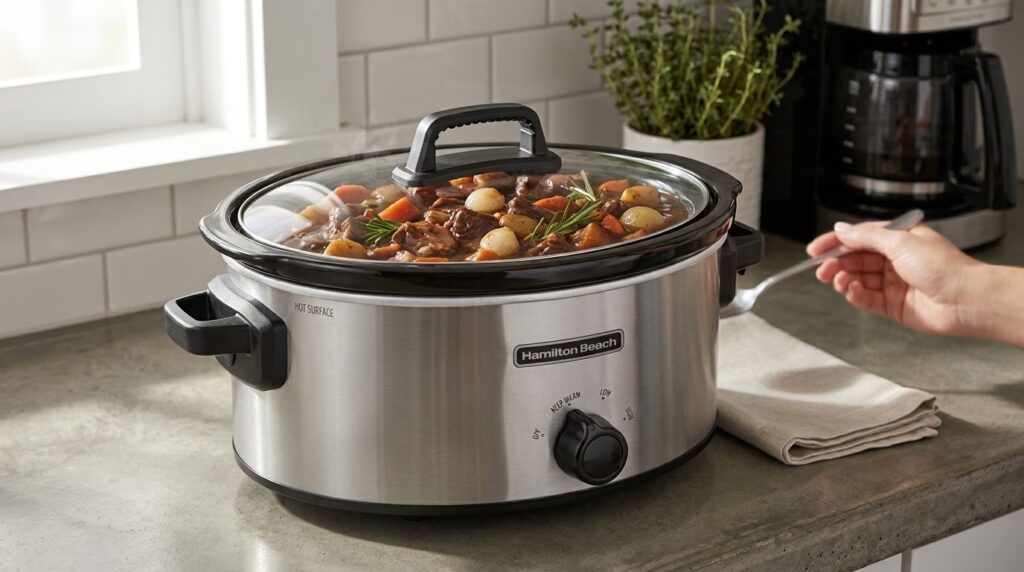
The 6-quart capacity opens possibilities across several cooking applications. Large batches of chili, hearty soups, and stews fit comfortably. Pulled meats, whether pork or chicken, work particularly well since the long, moist heat creates the tender texture these dishes require. Vegetable-forward meals, from ratatouille to vegetable curries, translate well to slow cooking.
Entertaining becomes more manageable when you can prepare components ahead. Consider making a large batch of soup or stew the night before guests arrive, then simply reheating it during the gathering. The slow cooker frees you from monitoring food while socializing.
For weeknight schedules, the appeal is straightforward: prepare ingredients in the morning, set the cooker, and return to finished food at day’s end. This is particularly valuable on days packed with work, school activities, or other commitments.
Batch Cooking and Freezing
The 6-quart volume makes batch cooking logical. You might prepare a double or triple batch of a casserole-style dish, portioning what you don’t use immediately into freezer containers. This creates a ready supply of meals for weeks when time is particularly tight.
The key to successful batch cooking is understanding your freezer capacity and realistic consumption patterns. Freezing too much food you never eat wastes space and money. Batch cooking works best when you’re genuinely going to consume the prepared food or can gift surplus to others.
Who Might Find This Model Useful
Larger Households
A 6-quart capacity naturally suits households with more people to feed. Families with four or more members may find a slow cooker this size accommodates their regular cooking needs better than smaller models. Cooking once for six people instead of cooking twice for three represents genuine time savings.
People Who Entertain Regularly
Whether for casual gatherings or more formal entertaining, having the ability to prepare large quantities of food hands-free appeals to people who host dinners or events. A slow cooker full of braised short ribs or a hearty soup serves as an excellent component of a larger menu.
Meal Prep Enthusiasts
People who dedicate time to preparing meals for the week ahead find larger slow cookers particularly useful. Sunday meal prep might involve preparing three or four different dishes in a 6-quart slow cooker, with each creating enough portions for multiple meals throughout the week.
Those Seeking Simplified Cooking
Anyone drawn to the convenience factor—preparing food that cooks unattended—finds value in slow cooking. Working professionals, busy parents, and others with limited time for active cooking represent significant portions of slow cooker users.
Homemakers and Entertaining-Focused Cooks
People for whom cooking is a primary focus or hobby often appreciate having multiple cooking tools available. A larger slow cooker complements other equipment and expands menu possibilities.
Important Considerations Before Purchasing
Kitchen Storage
This isn’t a trivial concern. Large appliances consume significant space whether sitting on counters or stored in cabinets. Be realistic about where this would live in your kitchen and whether you’d be comfortable with its presence in that location regularly.
Actual Usage Patterns
Owning an appliance is only valuable if you’ll actually use it. If you prefer fresh cooking or rarely prepare foods suited to slow cooking, a 6-quart capacity might remain largely unused. Consider how frequently you’d realistically use it before deciding.
Household Size and Cooking Quantity
A 6-quart cooker serves larger groups efficiently but may produce portions that exceed your needs. If you typically cook for two people and rarely entertain, a smaller slow cooker might be more practical. Conversely, if you frequently have larger groups or engage in serious batch cooking, the size makes sense.
Learning Curve
Slow cooking is straightforward, but applying techniques effectively requires some practice. Learning how to adapt recipes, understanding timing differences, and figuring out what works well in slow cookers takes experience. This isn’t a barrier to entry, but it’s worth acknowledging that initial results might vary.
Lid Arrangement
The glass lid’s removable nature is helpful for cleaning but means it requires physical storage. Some people appreciate lids that rest on top of the appliance; others don’t mind storing removable lids separately. This is a minor consideration but worth thinking about if you have limited kitchen storage.
Heating Element Placement
Larger slow cookers sometimes show variations in how evenly they heat throughout the crock. Some models have heating elements primarily on sides, while others have them more evenly distributed. Understanding the heating pattern of the specific model helps with placement of ingredients for even cooking.
General Comparison of Slow Cooker Types
The slow cooker market includes several categories, and understanding how this 6-quart model fits into the broader landscape provides helpful perspective.
Capacity Ranges
Small slow cookers (2-3 quarts) serve one or two people well and consume minimal space. Medium models (4-5 quarts) represent the most common size, fitting four-person households reasonably. Large models like this 6-quart option serve bigger groups and enable batch cooking. Extra-large models (7+ quarts) exist for commercial or very large household use but are less common in home kitchens.
Control Complexity
Some slow cookers feature simple controls with just low and high settings. Others include multiple temperature levels or preset programs. Still others incorporate digital displays and programmable timers. This 6-quart model with three settings falls into the relatively simple category. More complex controls don’t necessarily produce better results; they’re simply different approaches to achieving the same basic function.
Material Differences
Stoneware crocks remain most common, but some manufacturers use ceramic or other materials. Stoneware is durable and heat-retentive. Ceramic may offer different aesthetic qualities. The crock material influences cooking characteristics, durability, and how well it withstands temperature changes.
Price Points
Slow cookers range significantly in price from budget options to premium models with numerous features. A larger capacity generally costs more than smaller versions, though price-per-quart varies. Features like digital controls, extra settings, or specialty functions add cost regardless of size.
Practical Usage Tips and Best Practices
Ingredient Preparation
Most slow cooking applications benefit from properly preparing ingredients before cooking begins. Browning meats beforehand is optional but adds flavor depth. Cutting vegetables consistently ensures even cooking. While slow cookers are forgiving, putting thought into preparation typically produces better results.
Layering and Placement
How you arrange ingredients in the slow cooker affects cooking results. Placing harder vegetables in the bottom where heat is most concentrated and meat on top represents one common approach. This isn’t rigid dogma, but understanding how heat distributes through the cooker improves consistency.
Liquid Management
Slow cookers trap steam, so foods cook in their own moisture more than in oven-based methods. This often means using less liquid than you might in traditional recipes. Over time, you develop intuition about appropriate liquid levels, but recipes can guide you initially.
Timing Adjustments
A rule of thumb suggests that one hour on high roughly equates to two hours on low, though this varies by appliance and specific recipes. Understanding that timing is approximate rather than precise helps manage expectations about when food will be ready.
Cooking Frozen Foods
Generally, cooking frozen meats or vegetables in slow cookers takes longer and may result in uneven cooking. Most recipes recommend thawing beforehand. This isn’t a hard rule, but it’s the preferred approach for best results.
Frequently Asked Questions
What types of recipes work best in slow cookers?
Recipes involving tougher cuts of meat, stews, soups, casserole-style dishes, and braised items work particularly well. The extended, moist cooking environment suits these applications. Dishes requiring quick high-heat searing or precise texture control don’t translate as well to slow cooking.
Can you open the lid during cooking?
Technically, yes—you can open the lid to check progress or add ingredients. However, each time you lift the lid, heat escapes and cooking time extends. Most recipes recommend minimizing lid opening. A glass lid helps you observe food without opening it completely.
Is the appliance energy efficient?
Slow cookers use relatively little electricity compared to conventional ovens. They run at lower wattages and achieve results over longer periods with less power consumption. For budget-conscious energy users, slow cooking represents an efficient approach.
Can you use the crock for oven cooking or stovetop use?
This depends on the specific model. Some stoneware crocks are oven-safe, while others aren’t designed for direct oven heating. Check product specifications before attempting any cooking method beyond the slow cooker itself.
How do you clean and maintain the appliance?
The glass lid and dishwasher-safe crock simplify cleaning considerably. The main heating base typically requires only wiping with a damp cloth; it shouldn’t be submerged. Regular maintenance mainly involves keeping it clean and storing it properly when not in use.
Does cooking time differ between recipes?
Yes, significantly. Variables like ingredient size, starting temperature, and specific components all affect cooking time. Recipes should specify cooking times based on the temperature setting. Learning which recipes suit which settings comes through experience.
Can recipes be easily adapted from other cooking methods?
Sometimes. Soups, stews, and braised dishes adapt readily. Recipes relying on precise timing, high heat, or particular texture requirements adapt less easily. Trial and error helps you determine what works.
What’s the typical warranty and customer support situation?
Specific warranty details would be found with product documentation. Most major appliance manufacturers offer some warranty coverage, though terms vary. Research what’s included before purchasing if warranty coverage influences your decision.
Considering Your Slow Cooking Needs
The decision to purchase a slow cooker, and specifically a 6-quart model, ultimately hinges on how well it matches your cooking patterns and lifestyle. This isn’t a universal appliance that suits every kitchen equally. Someone living alone in a small space might find it impractical, while a large household or someone passionate about batch cooking might find it invaluable.
The three-temperature-setting approach keeps operation straightforward. The dishwasher-safe crock removes one common objection people have to slow cooking—the tedious cleanup. The 6-quart capacity opens possibilities for larger meals and batch cooking that smaller models simply can’t accommodate.
What distinguishes this model isn’t necessarily revolutionary features but rather solid, practical design focused on core functionality. It’s the appliance equivalent of a dependable, unpretentious tool rather than something flashy with unnecessary bells and whistles.
Conclusion
Slow cookers occupy a specific place in the modern kitchen, solving real problems for certain cooking needs and lifestyles. A 6-quart model addresses the needs of larger households, people who entertain, and those who engage in meal preparation practices that benefit from larger batch quantities.
Understanding how slow cookers function, recognizing which recipes suit this cooking method, and being realistic about your usage patterns helps ensure that any appliance purchase adds genuine value to your kitchen. The appeal of slow cooking—the convenience of hands-off preparation and the ability to create satisfying, complete meals with minimal active effort—remains genuine regardless of specific brand or model.
For those whose cooking patterns and household size align with what a larger slow cooker offers, this category of appliance can meaningfully simplify meal preparation and expand your cooking repertoire in useful ways.