Introduction
The modern kitchen presents an interesting paradox. We want versatility without clutter. We crave convenience without sacrificing quality. We’d love to explore diverse cooking techniques without investing in a cabinet full of specialized equipment. For those navigating these competing desires, multi-cooker technology has evolved significantly over the past decade, offering home cooks genuinely useful capabilities in a single appliance.
Multi-cookers represent a practical answer to real kitchen challenges. Whether you’re cooking for a growing family, managing meal prep across a busy week, or simply interested in exploring different cooking methods without excessive equipment investment, understanding what these appliances can do—and what their realistic limitations might be—matters. This guide explores one particular model in detail, examining its features, practical applications, and the types of households where it tends to work best.
The landscape of modern cooking appliances has shifted. Rather than viewing multi-cookers as compromise solutions, many experienced home cooks now recognize them as legitimate tools for expanding their cooking repertoire. Some use them as their primary cooking method; others integrate them into a broader kitchen setup. Both approaches can be valid depending on your specific needs and cooking style.
Understanding Multi-Cooker Technology
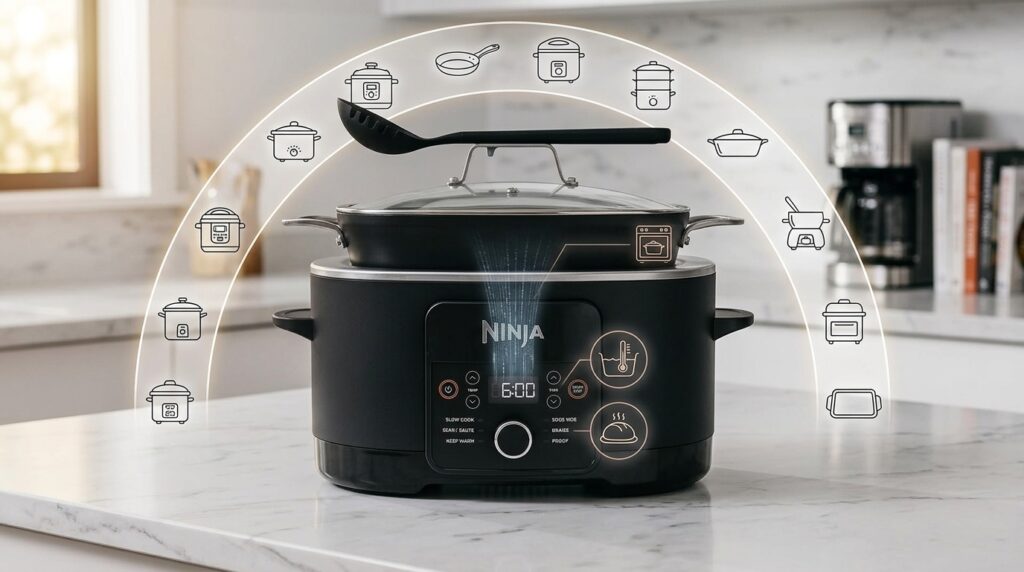
Before diving into specifics about any individual model, it’s helpful to understand the general category of appliances we’re discussing. Multi-cookers combine pressure cooking, slow cooking, steaming, sautéing, and various other heating methods into a single vessel. Different models prioritize different functions, and newer models tend to add capabilities that earlier iterations didn’t offer.
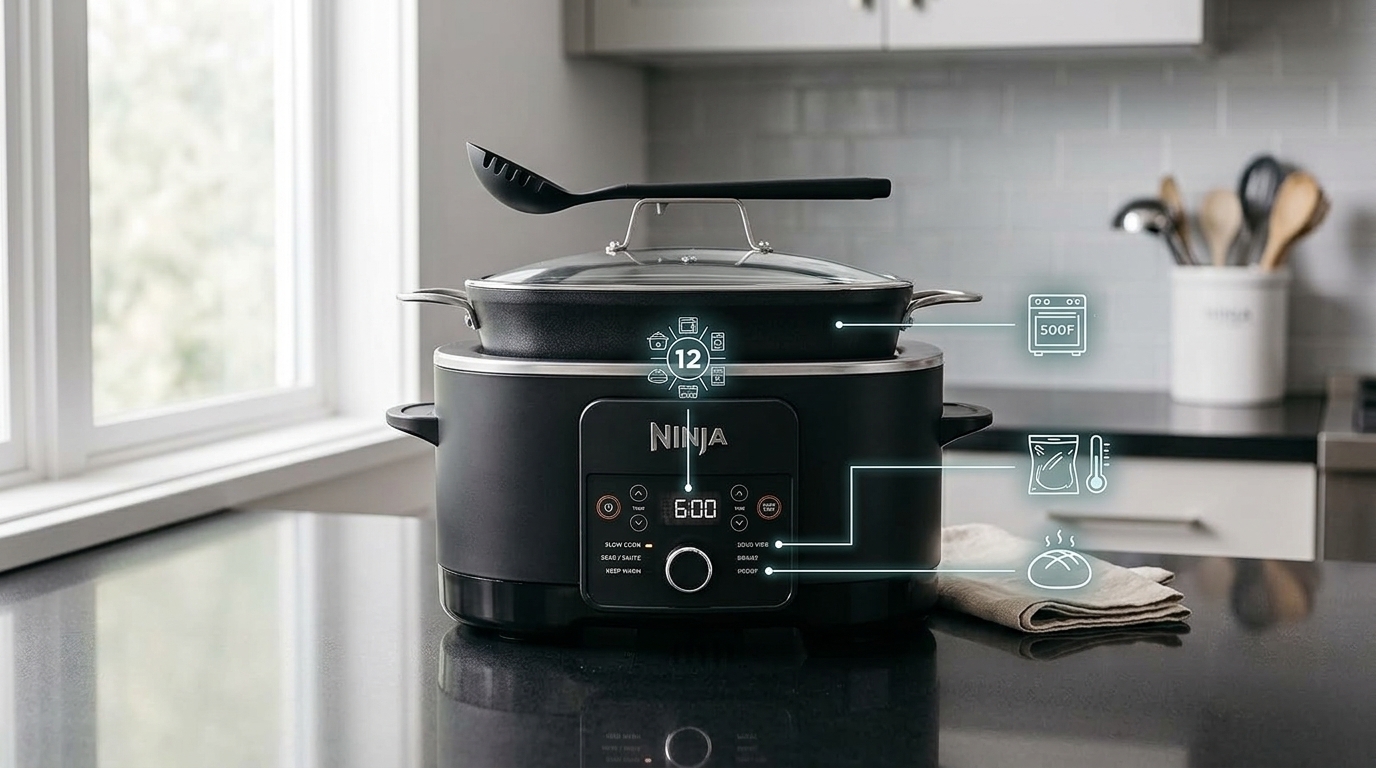
The Ninja PossibleCooker PLUS 12-in-1 represents an evolution of multi-cooker design. Rather than marketing itself primarily on “replacing” other appliances—which is technically true of many multi-cookers—this model specifically emphasizes a range of distinct cooking functions. The specifications worth understanding include its 8.5-quart capacity, the inclusion of pressure cooking and slow cooking capabilities, sous vide functionality, a proofing mode, sautéing options, steaming, and various other heating settings.
The “12-in-1” designation refers to the different cooking programs and settings available, not necessarily that it only replaces exactly twelve specific items. Understanding the distinction matters when you’re evaluating whether this tool makes sense for your situation.
Key Features and Capabilities
Capacity and Size
The 8.5-quart inner pot represents a significant volume for a countertop appliance. For context, this capacity generally accommodates meals for larger households or those who prefer cooking in batches. If you typically cook for two or three people, this size might exceed your regular needs, though batch cooking does make the excess capacity useful. The larger volume also means you can comfortably accommodate bulk ingredients without filling the pot to near-maximum levels, which is important for proper pressure cooker operation and ingredient movement during cooking.
The overall footprint of the appliance is worth considering relative to your counter space or storage options. Larger capacity typically correlates with larger external dimensions, so this isn’t the most compact option available in the multi-cooker category.
Pressure Cooking Function
Pressure cooking accelerates certain cooking processes by raising the boiling point of water through increased atmospheric pressure within the sealed pot. This means foods that might typically require hours of slow cooking—tough cuts of meat, dried beans, certain grains—can be ready in a fraction of the time. The physics is well-established and the technique has been used for decades, though modern appliances include safety features that earlier pressure cookers lacked.
For those unfamiliar with pressure cooking, one important consideration is the learning curve. Recipes need to be adapted for pressure cooking, as the environment changes cooking dynamics. Too much liquid can result in watery dishes; too little can cause burning. Understanding basic principles—like the difference between quick pressure release and natural pressure release—affects final results. Numerous resources online provide adapted recipes specifically formatted for pressure cookers, which eliminates the guesswork for most common dishes.
Sous Vide Capability
Sous vide cooking involves sealing food in a bag and cooking it at a precise, consistent temperature in a water bath. The technique originated in professional kitchens but has become more accessible for home cooks. The appeal lies in precise temperature control—you can cook proteins to an exact doneness level throughout, then finish them quickly with high heat for browning.
The practical advantage for home cooking centers on consistency and quality of results. Steaks, chicken breasts, and salmon cooked sous vide tend to come out uniformly cooked from edge to center. The challenge is the time investment—sous vide typically requires cooking for several hours, plus water bath setup time. It’s not a quick cooking method, but it delivers specific results that some cooks prioritize.
Proofing Function
Proofing is a specific phase in bread and dough development where yeast-leavened dough rises in a warm, humid environment. Professional bakeries use proof boxes for this purpose. A proofing function creates similar conditions, maintaining temperature and humidity to encourage proper yeast activity without overproofing the dough.
For bread bakers, this capability can be genuinely useful, particularly in kitchens where achieving warm spots for rising is challenging. However, proofing is a specialized function used only during bread making, so it’s worth considering whether bread making is something you currently do or plan to do before weighing this feature heavily.
Slow Cooking and Steaming
Traditional slow cooker functionality is included, allowing low-temperature cooking over extended periods—a method many cooks use for weekend meal prep. Steaming capability enables cooking vegetables, seafood, and rice using steam rather than direct contact with liquid, which can preserve nutrients and texture differently than boiling.
Nonstick Cooking Surface and Oven-Safe Pot
The nonstick interior surface reduces sticking for certain dishes and simplifies cleanup. The pot being oven-safe to specific temperatures (check manufacturer specifications) means you can transfer partially-cooked food to an oven to finish cooking, which offers flexibility that some home cooks value.
Glass Lid
A transparent glass lid allows monitoring cooking progress without opening the appliance, which is particularly useful for visual cooking methods like slow cooking or steaming where you might want to observe food without breaking the seal.
Practical Usage Scenarios
Weeknight Meal Preparation
For busy households, the combination of pressure cooking speed and capacity makes batch cooking feasible. Sunday meal prep sessions might involve cooking large quantities of proteins, grains, and vegetables simultaneously or sequentially. The 8.5-quart capacity means you can cook enough of a dish for a week’s worth of lunch portions without multiple batches.
Practical example: A home cook might pressure cook chicken breasts in the morning, then use the same pot for quick sautéing of vegetables, then assemble bowls with various toppings. By evening, instead of starting from scratch, you’re combining pre-made components into varied meals.
Specialized Cooking Techniques
Home cooks interested in exploring specific techniques find these functions useful. Someone who has recently become interested in bread baking might use the proofing function. A cook experimenting with precision cooking might use sous vide for specific dishes rather than as a primary method. The range of functions means different family members might use different capabilities.
Dietary Restrictions or Preferences
Certain cooking methods work better for specific dietary approaches. Those following traditional pressure cooker recipes for beans and legumes, for instance, can prepare them with greater convenience. Slow cooking works well for bone broth and other time-intensive recipes popular in various dietary communities.
Small Space Living
For apartments or kitchens with limited storage, a multi-function appliance reduces the total number of devices needed. Rather than separate slow cooker, pressure cooker, steamer, and rice cooker, a single appliance handles multiple roles.
Who This Appliance Might Suit Well
Larger Households
Cooking for six or more people regularly makes the 8.5-quart capacity genuinely useful rather than excessive. Families with this size find efficient batch cooking particularly valuable for managing kitchen time.
Home Cooks Interested in Technique Exploration
Someone who enjoys trying different cooking methods and recipes finds the variety of functions genuinely useful. If you’re the type who researches new cooking techniques and wants to experiment, the different modes provide legitimate ways to expand your cooking.
People with Limited Stovetop Space
Those living in RVs, having small kitchens, or sharing kitchen space with roommates might prioritize consolidating multiple functions into a single appliance. One large appliance sometimes makes more sense than three smaller ones when storage is the limiting factor.
Batch Cooking Enthusiasts
If you dedicate time to preparing multiple meals ahead of time, the capacity and speed capabilities align with this workflow.
Bread Bakers
Though proofing is a specialized function, dedicated bread bakers do find this capability worthwhile.
Important Considerations Before Purchasing
Counter Space and Storage
The 8.5-quart size requires considerable counter real estate if you prefer to keep appliances accessible. If you prefer storing kitchen tools in cabinets, you’ll need storage space suitable for a large pot-shaped object. Some households manage this by keeping the appliance out during heavy-use seasons (like cold months when slow cooking is frequent) and storing it otherwise.
Learning Curve
Pressure cooking requires understanding how the appliance works, what recipes work in a pressure environment, and how to adjust cooking times. Sous vide requires understanding temperature-time combinations for different foods. If you prefer appliances you can use intuitively without research, this isn’t that appliance. The flip side is that, once familiar with these methods, many cooks find them straightforward to execute.
Recipe Adaptation
While abundant pressure cooker recipes exist online, if you primarily follow traditional stovetop recipes, you’ll need to either adapt them or find pressure-cooking versions. Conversion isn’t always straightforward, and sometimes recipes don’t adapt well to pressure cooking.
Maintenance and Cleaning
Multi-cookers have more parts to learn about than single-function appliances. The lid contains valves and components that require specific cleaning. The pot itself, while nonstick, still requires proper care. If you prefer minimal-maintenance kitchen tools, this represents more complexity than you might want.
Limitations in Browning
Unlike some other cooking vessels, multi-cookers designed for pressure cooking don’t facilitate browning as efficiently as stovetop cooking. Many recipes require browning meat before pressure cooking, which means you’re using the appliance in combination with stovetop tools rather than as a complete replacement. Some models have sautéing functions, but browning in a small hot surface isn’t identical to browning in a larger pot.
Comparing Multi-Cookers to Other Cooking Methods
Multi-Cooker Versus Separate Appliances
A dedicated pressure cooker might cook slightly faster than a multi-cooker because it’s optimized for that single function. A dedicated slow cooker might have more precise temperature control for slow cooking. A dedicated rice cooker might produce more consistent rice. However, owning three separate appliances requires three times the storage space and three times the counter real estate when not stored. This is the genuine trade-off worth considering: specialized performance versus consolidated function and space savings.
Multi-Cooker Versus Stovetop Cooking
Stovetop cooking offers immediate visual feedback and straightforward control but requires active monitoring. Multi-cooker cooking often requires less active attention but less visible feedback during the process. For busy people who can start cooking and leave, multi-cookers offer convenience. For those who enjoy active cooking engagement, stovetop methods might feel more satisfying.
Multi-Cooker Versus Oven Cooking
Large batch recipes often used to be done in the oven. Oven capacity limits batch size, and oven cooking takes considerable time. A multi-cooker’s speed advantage for certain recipes is genuine, though oven-finished dishes often have characteristics that multi-cooker-only cooking doesn’t replicate. Many home cooks use multi-cookers and ovens in combination rather than viewing them as competing tools.
Features Specific to This Model
The Ninja PossibleCooker PLUS 12-in-1 distinguishes itself through the combination of capacity, the specific inclusion of sous vide as a core function, and the proofing capability. Some competing multi-cookers emphasize different functions or different sizes. The 12-in-1 designation suggests a particular focus on breadth of functions.
The nonstick coating and oven-safe pot mean you have flexibility in how you finish dishes—you can pressure cook, then transfer to an oven if desired, without changing vessels.
The glass lid offering visibility is a quality-of-life feature that some cooks genuinely appreciate during slow cooking or steaming, where you might otherwise remove the lid repeatedly to check progress.
Frequently Asked Questions
How is this different from a traditional pressure cooker?
Traditional pressure cookers are stovetop-based, requiring active monitoring. This appliance is electric and automated, controlling temperature and pressure internally. Electric models provide convenience for those who prefer set-and-forget cooking, while stovetop enthusiasts might prefer the control and feedback traditional methods offer.
Can I use sous vide in this if I already have a separate sous vide immersion circulator?
Technically, yes, but the capability exists within this appliance, so you wouldn’t need a separate device. This is relevant if you’re considering which appliances to purchase—you might skip buying a separate sous vide if this appliance covers your needs.
Will I actually use the proofing function?
This depends entirely on your bread-baking habits. If you don’t bake bread, you won’t use it. If you’re considering getting into bread baking, it’s a useful feature. If you already bake bread without a proof box, you probably have a method that works for you, and the proofing function might be convenience-enhancing rather than essential.
How much counter space does this really need?
The appliance itself takes up significant space—roughly equivalent to a countertop microwave, perhaps slightly larger. If you keep it on your counter, you’re dedicating premium real estate to it. Many households store it in a cabinet or pantry and retrieve it when meal-prepping season arrives.
Is the learning curve significant?
For pressure cooking, there’s a moderate learning curve. You need to understand liquid ratios, cooking times for different foods, and how to manage pressure release. However, thousands of tested recipes exist specifically for pressure cooking, and most people become comfortable within a few uses. Sous vide has a steeper technical learning curve—understanding temperature-time combinations takes research. Slow cooking and standard cooking functions have negligible learning curves.
What about safety?
Modern electric pressure cookers include multiple safety mechanisms—pressure release valves, automatic shut-off switches, and sensors that prevent operation if the lid isn’t secure. The technology is well-established and extensively tested. That said, any tool requires proper use; following the manufacturer’s instructions matters.
Can I use this outdoors or in an RV?
The appliance requires electrical power. In an RV, it depends on your electrical system capacity. Using high-power appliances in RVs with limited electrical systems can be problematic. Outdoors, it depends on access to electricity.
What’s the warranty situation?
Manufacturer warranties vary. Research the specific warranty terms for your market and model to understand coverage and duration.
How hot does the pot get externally?
During cooking, the outer pot reaches temperatures warm to the touch but not unsafe for quick contact. The exterior walls don’t get as hot as stovetop cookware, though they do generate heat. This makes it somewhat safer around children than stovetop cooking, though caution is still necessary.
Maintenance and Longevity Considerations
Proper maintenance extends appliance lifespan. The nonstick surface benefits from using wooden or silicone utensils rather than metal. The pressure valve and lid components need regular cleaning per manufacturer instructions. The inner pot, while durable, benefits from hand washing rather than dishwasher cycles for the nonstick surface.
Like all electrical appliances, proper storage and regular use of known features tends to identify problems early. An appliance that sits unused for years might develop issues you wouldn’t notice if actively using it regularly.
The Role of Multi-Cookers in Modern Cooking
Multi-cooker adoption reflects broader shifts in how many people approach cooking. Rather than seeing cooking as a purely hands-on activity requiring dedicated attention, many view it as an important function that competes for their time alongside work, family, and other responsibilities. Tools that efficiently handle basic cooking tasks—like preparing dried beans or pressure cooking tough cuts of meat—serve this modern context.
Simultaneously, other cooks enjoy the process of cooking itself and might find set-and-forget cooking less satisfying than active stovetop engagement. Both approaches are valid; different tools serve different philosophies and lifestyles.
The Ninja PossibleCooker PLUS 12-in-1 doesn’t replace skilled cooking or the joy of engaging with food. What it does do is make certain cooking techniques more accessible and more convenient for people who want those benefits without dedicating substantial time to them.
Making Your Decision
Evaluating whether a multi-cooker makes sense involves honest reflection on several questions: Do you have available counter or storage space? Are you interested in trying cooking techniques the appliance supports? How often do you cook from scratch currently? Are you more interested in convenience or in active cooking engagement?
There’s no universal right answer. Someone who cooks once weekly might find the learning curve and storage complexity unnecessary. Someone who meal-preps four times weekly might find it indispensable. Someone who enjoys traditional cooking methods might find automated cooking unsatisfying. Someone with a small kitchen and limited storage might see it as a genuine space solution.
The level of function breadth this particular model offers means you’re paying for capabilities you might not use. Alternatively, if you genuinely plan to use pressure cooking, slow cooking, sous vide, and proofing capabilities, consolidating these functions into one appliance makes economic and practical sense compared to purchasing each function separately.
Final Thoughts
The evolution of multi-cooker technology has created genuinely useful tools for certain cooking needs and certain lifestyles. The Ninja PossibleCooker PLUS 12-in-1, with its 8.5-quart capacity and range of functions, represents a comprehensive option for households that want versatile cooking capability without accumulating numerous single-purpose appliances.
Whether this specific model makes sense for your situation depends on your cooking habits, your kitchen space, your interest in the specific functions it offers, and your preferred cooking style. Taking time to honestly assess these factors, rather than viewing the appliance as a solution to vague kitchen problems, leads to better decisions about whether it’s the right tool for you.
For those whose needs align with what the appliance offers, it can genuinely simplify kitchen workflows and expand cooking possibilities. For others, alternative approaches—using a traditional pressure cooker or slow cooker, cooking primarily with stovetop methods, or keeping specialized kitchen tools separate—might serve better.