Introduction
Slow cooking has become a staple in modern kitchens for good reason. The ability to prepare a complete meal in the morning and come home to a finished dinner represents a significant shift in how people approach weeknight cooking. For households managing busy schedules, dietary preferences, or simply those who prefer low-and-slow cooking methods, a quality slow cooker can transform meal preparation from stressful to manageable.
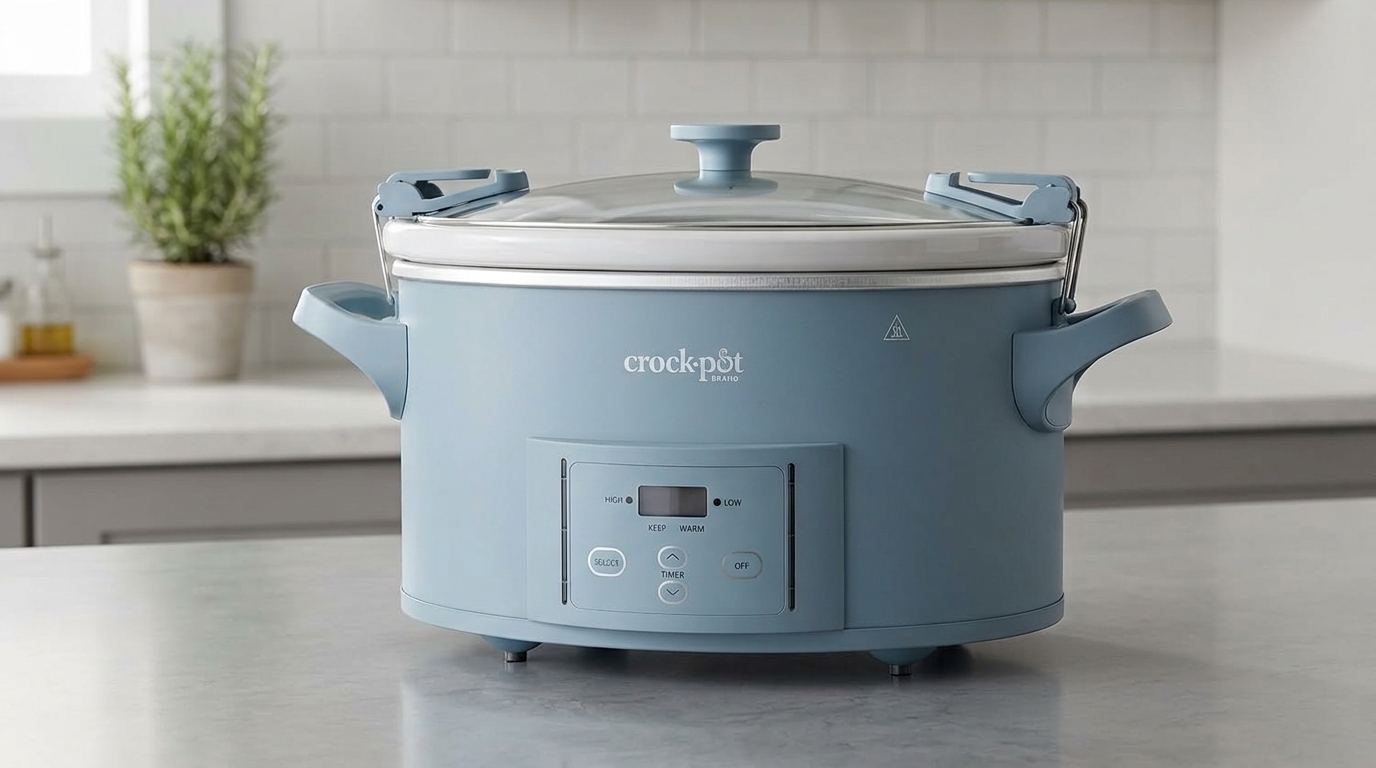
The Crock-Pot Design Series 7-Quart Programmable Slow Cooker in Morning Haze Blue represents one option in a market filled with slow cooker choices. Understanding what this particular model offers, how it functions, and whether it aligns with your household needs requires looking beyond surface-level specifications. This guide provides a detailed exploration of the cooker’s features, practical applications, and considerations that might influence your decision-making process.
The 7-quart capacity deserves immediate attention, as size dramatically impacts how a slow cooker functions within a kitchen. This model sits at the larger end of the spectrum, which opens possibilities for certain cooking situations while introducing considerations for others. The programmable aspect adds another layer of functionality that affects both convenience and flexibility in meal preparation.
Key Features and Technical Specifications
Capacity and Size Considerations
The 7-quart capacity represents a significant volume for a countertop appliance. To put this in perspective, a 7-quart slow cooker can comfortably feed 10-12 people with standard portions, or allow for substantial meal prep and leftovers for a typical family. This size works particularly well for batch cooking, meal preparation for the week ahead, or gathering situations where you’re preparing food for guests.
The physical dimensions matter when considering storage and counter space. A 7-quart model will occupy meaningful real estate on your counter, so understanding your kitchen layout before purchasing is practical. Some households might find this size perfect for permanent counter placement, while others may need to store it away between uses. The weight of a full cooker—containing liquid and food—means the location you choose should be stable and easily accessible for removal once cooking completes.
Programmable Controls and Time Settings
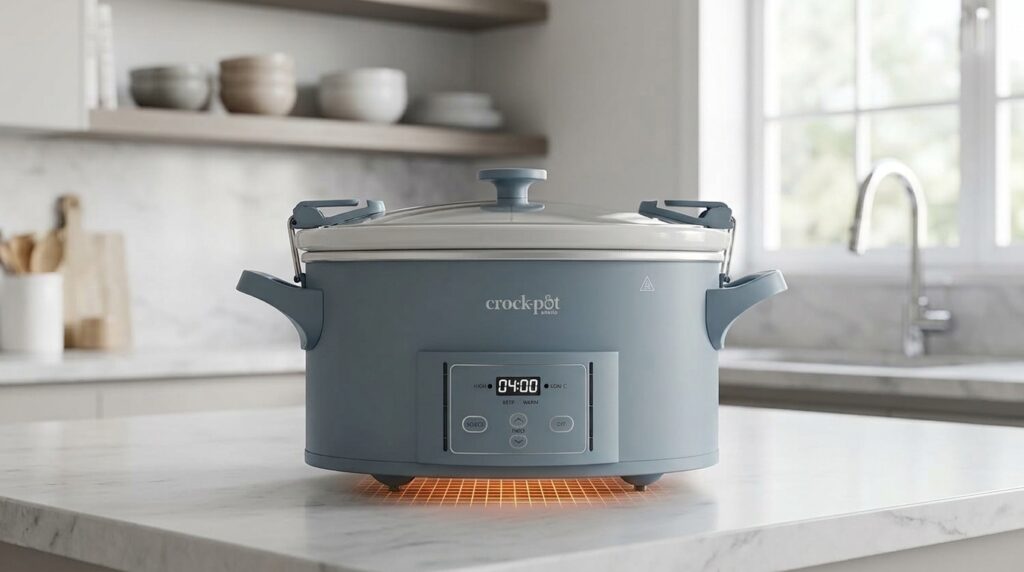
Programmability represents a significant convenience feature in modern slow cookers. This Crock-Pot model includes digital controls that allow you to set specific cooking times and temperatures rather than relying on simple high or low heat switches. The ability to program the cooker in the morning, leave for work, and know that your meal will finish cooking at a predetermined time provides genuine logistical advantages.
Different food types and recipes benefit from specific cooking durations and temperatures. Programmable features let you match your cooking approach to your ingredient choices. A lean protein might cook perfectly in four hours, while a tougher cut of meat or dried legumes might need eight hours. Having the flexibility to set these parameters specifically, rather than guessing, can improve results considerably.
Heating Elements and Heat Distribution
The heating approach a slow cooker uses affects how food cooks and how evenly flavors develop. The Design Series model employs heating elements designed to distribute heat gradually and consistently around the cooking vessel. This approach helps prevent hot spots and promotes even cooking throughout the meal, which is particularly important when dealing with larger batches of food.
The exterior of the cooker remains cool-touch during operation, which matters for safety in households with children or pets, or simply for practical kitchen management when space is tight. The ability to safely handle the cooker while it’s operating without risk of burn makes a difference in usability.
Stoneware Insert and Accessibility
The removable stoneware insert serves multiple purposes. First, it allows you to transfer leftovers directly to storage containers without additional dish washing. Second, the removable design means you can soak stubborn residue without worrying about damaging electrical components. The Morning Haze Blue color of this model represents the aesthetic design choice, which extends to both the exterior casing and the stoneware insert.
The shape and design of the interior vessel affects what types of recipes work well. A wide, shallow bowl accommodates different foods differently than a narrower, deeper design. The 7-quart capacity is housed in a generously-sized stoneware that allows for various ingredient combinations and cooking styles.
Practical Applications and Cooking Scenarios
Meal Preparation and Batch Cooking
One of the most popular applications for a 7-quart slow cooker is dedicated meal preparation. Rather than cooking individual meals, many people use this size to prepare multiple days’ worth of food in a single cooking session. Shredded proteins that can be portioned and frozen, soup bases, stews, and other preparations benefit from this approach.
The larger capacity allows for experimentation. You might cook several pounds of chicken breast alongside a flavorful broth, then divide the finished product into meal-sized portions. You could prepare a pot of beans or legumes, which can then be used across multiple recipes throughout the week. This strategy can reduce weekday cooking stress significantly.
Family Gatherings and Entertaining
The 7-quart capacity makes this model suitable for situations where you’re preparing food for guests or larger family gatherings. Holiday potlucks, casual dinner parties, or family reunions often call for dishes that stay warm and ready to serve for extended periods. A slow cooker accomplishes this while freeing up your oven and stovetop for other preparation.
The aesthetic design of the Morning Haze Blue finish means the cooker can go directly to a serving table, rather than requiring transfer to a separate serving dish. This convenience factor extends beyond just cooking—it simplifies the entire serving process.
Temperature Maintenance for Events
Beyond just cooking food, slow cookers excel at maintaining specific temperatures for already-prepared dishes. If you’ve prepared a dish using another cooking method, you can transfer it to the slow cooker set to “warm” to keep it at safe serving temperature for hours without further cooking or drying out. This capability proves invaluable when coordinating timing with guests or managing complex meal preparations.
Who Might Find This Model Suitable
Large Households and Families
Families with more than four or five members often find larger slow cookers pay dividends through reduced cooking frequency and better batch cooking capabilities. The 7-quart size provides genuine advantages for people feeding multiple people regularly.
People Who Prioritize Meal Preparation
Individuals who dedicate time to meal prep—whether weekly or seasonally—benefit from the capacity to cook significant quantities. The programmable features allow you to maximize your cooking time efficiency by having specific meals ready when needed.
Those with Limited Cooking Time or Desire
People managing demanding work schedules, side businesses, or other time commitments often find slow cookers transform their approach to home cooking. The ability to prepare and set a cooker in morning minutes, then have dinner ready upon returning home appeals to many lifestyles. The programmable feature enhances this convenience by removing the need to babysit cooking times.
Home Entertaining Enthusiasts
Individuals who frequently host gatherings—whether formal dinner parties or casual family events—appreciate having reliable equipment that can handle substantial quantities. The 7-quart capacity, combined with the ability to maintain temperatures, makes this practical for various entertaining scenarios.
Individuals Interested in Budget-Friendly Cooking
Slow cooking, by its nature, makes economical use of fuel. The extended cooking time at lower temperatures requires less electrical consumption than stovetop or oven cooking. Additionally, slow cooking makes cheaper cuts of meat—which develop excellent flavor and texture through long, slow cooking—a practical staple rather than requiring premium cuts.
Important Considerations Before Purchasing
Storage and Counter Space
A 7-quart slow cooker demands real estate. If your kitchen counter space is already pressed or if you prefer not keeping appliances visible, storage becomes a consideration. Think practically about whether you’d leave this on the counter permanently or if you have adequate storage space nearby.
Your Typical Cooking Needs
Understanding your household’s actual cooking patterns matters. If you typically cook for two people and rarely entertain, the 7-quart size might prove excessive for your needs. Smaller models offer better efficiency for more modest quantities. Conversely, if you frequently cook for groups or do regular meal preparation, the investment in larger capacity makes sense.
Cleaning and Maintenance
The removable stoneware insert simplifies cleaning considerably compared to fixed bowls. However, a 7-quart cooker does require more counter and storage space when disassembled. Ensure you have adequate storage for housing the glass lid and base when not in use. The size of the insert also means it takes up more dishwasher space if you use one for cleaning.
Learning Your Specific Unit
All slow cookers have individual variations in how they heat and cook. Some run hotter than others; some develop hot spots. Spending time with your specific cooker and taking notes about how it performs helps you adjust recipes and cooking times for optimal results. This learning curve is relatively brief but worth acknowledging.
Understanding Slow Cooking as a Method
Slow cooking represents a fundamentally different approach to food preparation than stovetop or oven cooking. The extended time at low temperatures creates distinct outcomes in texture, flavor development, and nutritional aspects.
Temperature Zones in Slow Cookers
Most slow cookers operate with a heating element surrounding the stoneware insert, creating slightly different temperatures at different points. The liquid inside typically registers several degrees cooler than the sides and bottom where heating elements make direct contact with the stoneware. This variation affects how ingredients cook. Foods closer to the heated surfaces may cook differently than those suspended in liquid. Understanding this reality helps explain why some recipes recommend layering ingredients in specific ways.
Liquid Dynamics
Slow cooking creates a humid, moist environment. The low temperature prevents rapid evaporation, meaning liquids stay relatively constant throughout cooking. This differs from stovetop cooking where evaporation concentrates flavors. It also means recipes designed for slow cookers typically use less liquid than stovetop equivalents. Adding the same amount of broth you’d use for stovetop cooking can result in overly soupy dishes.
Browning and Flavor Development
The low, slow cooking method doesn’t create browning reactions that develop complex flavors in sautéed or seared foods. Many slow cooker recipes compensate by browning ingredients first in a skillet, then transferring to the slow cooker. This extra step, while adding another pan to wash, significantly improves final dish complexity. Some people embrace this as an intentional step; others skip it for efficiency.
Comparing Different Slow Cooker Approaches
Small vs. Large Capacity Models
Small slow cookers (3-4 quarts) suit single people, couples, or small families. They heat more quickly and use less electricity. However, they don’t work well for meal prep or entertaining. Large models like the 7-quart offer capacity but take longer to heat fully and consume more electricity per use.
Programmable vs. Manual Controls
Simple slow cookers with just high/low switches and a dial timer offer basic functionality at lower cost. Programmable models add precision and convenience but include more electronics that could theoretically fail. For most people, programmable features justify the added cost through improved convenience and more reliable results.
Removable vs. Fixed Inserts
Some slow cookers feature fixed stoneware bowls built into the base, while others use removable inserts. Removable designs offer flexibility for storage and easier cleanup but create a multi-part system. Fixed designs simplify storage as a single unit but can be messier to clean, particularly with stubborn residue.
Addressing Common Questions
How Often Do Slow Cookers Need Replacing?
Quality slow cookers typically last many years with reasonable care. Most failures occur due to electrical component issues rather than the heating element wearing out. The stoneware insert, if properly cared for, essentially lasts indefinitely. Assuming moderate to regular use, a well-made slow cooker should serve a household for a decade or longer.
Can You Leave a Slow Cooker Running While Away?
Most modern slow cookers are designed to operate safely while unattended for extended periods. However, it’s worth reading the specific manual for your model’s guidance. The “warm” setting maintains temperature without further cooking, making it safe for unsupervised operation. The “low” and “high” settings generate more heat and are less commonly used for completely unattended cooking, though many people do this routinely.
What Types of Recipes Work Best in Slow Cookers?
Recipes involving tougher cuts of meat that benefit from extended cooking excel in slow cookers. Soups, stews, chili, roasts, chicken dishes, bean preparations, and many ethnic cuisines designed around slow cooking methods work particularly well. Recipes requiring precise timing or last-minute additions adapt less naturally but aren’t impossible—they just require some recipe adjustment.
How Does Cooking Time Compare to Conventional Methods?
A meal that takes 90 minutes in a conventional oven might take six to eight hours in a slow cooker on low setting. This speed differential represents the core trade-off: slower cooking for set-and-forget convenience. The longer time allows more complex flavor development while requiring less active effort.
Is the Morning Haze Blue Finish Durable?
Aesthetic finishes on appliances are primarily cosmetic but should withstand normal kitchen use without chipping or fading significantly. The stoneware insert, being ceramic, is quite durable as long as it’s not subjected to sudden temperature changes or dropped. The exterior finish is less critical to performance and simply affects appearance.
Practical Tips for Success with Large Capacity Slow Cookers
Starting with recipes specifically designed for slow cooking rather than trying to adapt stovetop recipes helps build confidence. Established slow cooker recipes already account for the unique cooking environment. Once comfortable with the method, recipe adaptation becomes more intuitive.
Keeping notes about cooking times for specific recipes with your cooker helps. Make a simple list of what you’ve tried, how long it took, and whether you’d adjust the time next time. This personalized reference becomes invaluable.
Avoid lifting the lid frequently while cooking. Each time you open the lid, you release heat and humidity, extending cooking time. When checking on food, develop a quick-peek method—a brief lift rather than extended inspection—to minimize heat loss.
Layering ingredients purposefully improves results. Place denser vegetables on the bottom where heat contact is greatest, suspend delicate items in liquid, and arrange meat strategically. This thoughtful arrangement helps everything cook more evenly.
Final Considerations
A 7-quart programmable slow cooker represents a significant kitchen investment. Whether it makes sense depends entirely on your household’s cooking patterns, space availability, and priorities. For people who embrace slow cooking as a regular method and frequently cook for groups or in quantities, this size and feature set make practical sense. For others, smaller or differently-featured models might serve needs more efficiently.
The Morning Haze Blue finish represents an aesthetic choice that allows the cooker to function as both an appliance and a design element in your kitchen. If appearance matters alongside functionality, this visual consideration becomes part of the overall package evaluation.
Conclusion
The Crock-Pot Design Series 7-Quart Programmable Slow Cooker fills a specific niche in the slow cooker market: it’s designed for people who cook in quantity, need reliable programmable features, and value a quality build. The 7-quart capacity opens possibilities that smaller models can’t match, while the programmable controls add convenience and precision to cooking.
Whether this particular model suits your needs depends on your household’s specific circumstances, cooking patterns, and priorities. Taking time to honestly assess your actual cooking needs—rather than aspirational needs—helps ensure any appliance investment pays dividends through genuine use and utility.